This autumn I began a year as CORE Professorial Fellow at the Helsinki Collegium for Advanced Studies, University of Helsinki, where I am working on a new project, Elemental Inequalities. This is a large, four-to-five-year research project and my time in Helsinki will be focused on literature reviews and conceptual mapping.
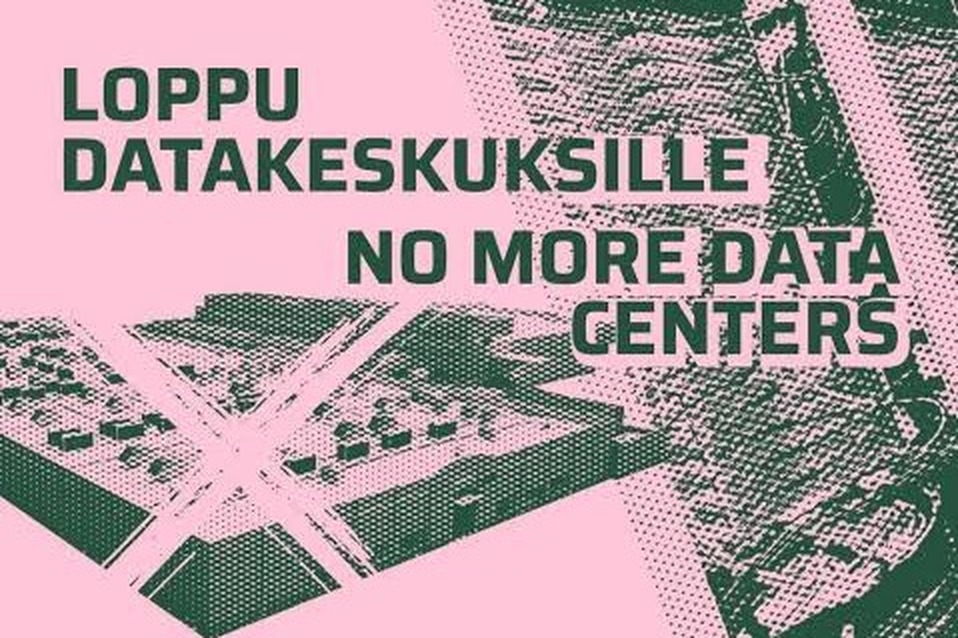
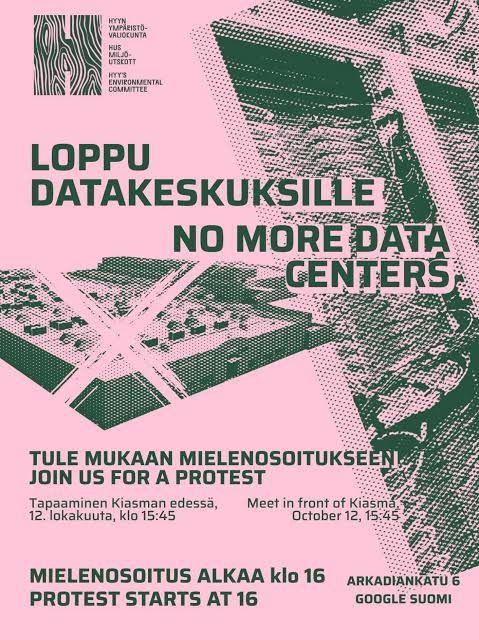
I travelled from the UK to Helsinki in August 2026 to begin my fellowship at the end of one of the hottest summers in recorded history. Before I left the UK, residents in East London had just lost their fight to halt the building of a data centre for City traders on land desperately needed for social housing. As I arrived in Finland, environmental campaigners had exposed suspected illegal clear-felling of more than 300 hectares of forest at two of Google’s new data-centre sites. Social struggles against data centres – ‘future-eating machines’ (Fremeaux and Jordan, 2021) – form part of a global fight for liveable futures, as tech and finance capital accelerate the enclosure (assetisation) of social and environmental resources and infrastructures.
Privatisation and deregulation have significantly deteriorated the vital social (e.g. housing, health), and elemental (e.g. water, land, air) resources and infrastructures that previously provided a basic level of security for the UK population. The social harms of these ‘necroeconomic’ policies are evident in deepening inequalities of wealth and health, and in marked reductions in working-class life expectancy in the UK (Tyler & Skeggs, 2026). Environmental harms are manifest in the pollution of river and marine ecologies with sewage and industrial toxins, in the contamination of land and food with pesticides and microplastics, and in the fact that too much of the air we breathe, indoors and out, is contaminated with toxic particulates.
Within Europe, the bodies and living environments of multiethnic working classes are disproportionately impacted by poverty, pollution and premature death, but these communities are (often) stigmatised and othered within mainstream environmentalism. Further, disciplinary silos segregate social-scientific research on inequalities from life-science research on environmental degradation, ecocide and climate breakdown. Weaving together research from social and environmental history, the social sciences and the life sciences, Elemental Inequalities will rethink the socioenvironmental crisis of late capitalism through the prism of historic and contemporary class struggles for clean water, breathable air, food and land. Struggles against data centres encapsulate this elemental politics: hyperscale facilities consume vast quantities of land, water and electricity, competing with local communities for resources, while their profits flow to tech and finance capital and their costs – depleted water supplies, strained energy grids, lost land and green space – fall on the places and people least able to bear them.
Elemental Inequalities also asks what sociology can and should contribute to understanding and combating the socioenvironmental polycrisis of the current conjuncture. Sociology has arguably suffered from ‘environmental aphasia’: Catton and Dunlap (1978) argued that sociology’s ‘human exemptionalism’ treated society as independent of its biophysical base, and decades later Urry (2011) found it slow to engage with climate change. Gardner and Müller (2025) have recently argued that addressing this requires not just adding climate to the curriculum but transforming how sociology is taught.
To address this, the project will recover a socioenvironmental body of knowledge that runs from Engels’s (1845) account of the ‘social murder’ of the industrial working class, through Thompson’s (1971) histories of enclosure and the moral economy of the crowd and Williams’s (1982) socialist ecology and Foster’s (1999) recovery of Marx’s ‘metabolic rift’ for environmental sociology, to Linebaugh’s (2019) account of ‘thanatocracy’. This materialist tradition is brought into conversation with the recent elemental turn in the wider social sciences (e.g. Engelmann and McCormack, 2021; Vergès, 2024) and decolonial environmental and ecological thought (e.g. Ferdinand, 2022). Methodologically, the project combines historical sociological research on ‘working-class environmentalism’ (Barca, 2012; Bell, 2020) with research alongside grassroots community groups.
Related reading: Tyler, I. and Skeggs, B. (2026) ‘A Licence to Kill: Necroeconomic Suffocation by Stealth and the Fight for Life’, Antipode.

